
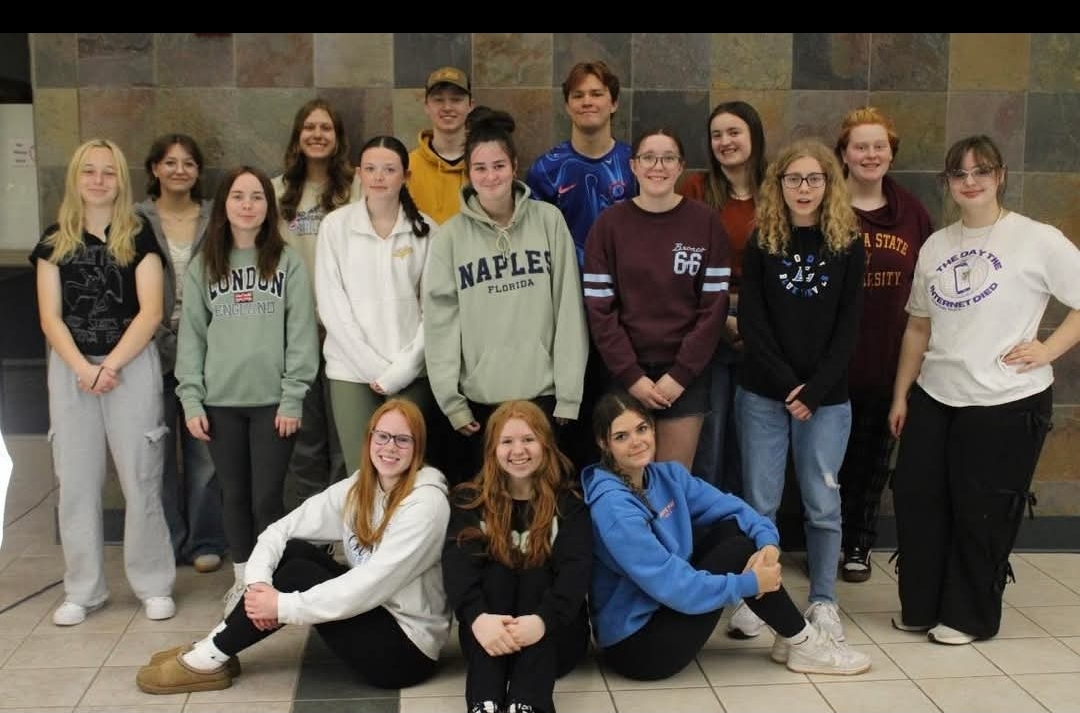






Who knows how the sausage is made? In this case our “sausage” is the Lodi High School Broadcast. The Broadcast is put on by the students in Writing for Publication. The broadcast, according to Harrison Keyeski, an LHS junior and the main broadcast editor, “… originally was meant to be an entertaining way to get announcements to students, but ever since the announcements started coming out through email, it’s become more of a monthly film-project that involves the student body.” There’s a lot that goes into creating it.
Before a segment can be filmed and released, the people in it need to know what to say and do! To do this, people write scripts. Everyone’s process for writing a script is a little different. Harrison says, “ To write a segment I usually try to come up with a quick one-sentence summary of what I want to do… if an idea really resonates with me I’ll expand it and usually work with Mac Griffis to write a script with dialogue, editing, and filming directions,” while Bryce Ballweg, an LHS freshman, says, “An idea first forms in my head and I go from there with it, adding in what my other classmates in and outside of Writing for Pub might want.”
After a script is written and approved, the actors start filming. Depending on what kind of segment it is, filming changes. For example, the announcements happen in the AV studio in front of a greenscreen. This means the background can be easily edited. The segment is also filmed on a large camera mostly fixed in place. Other segments, such as vox pop and parking lot review happen outside of the studio. This is done using smaller, portable cameras and microphones. Finally, some skits are filmed both ways! Comedy skits can involve both work in the AV studio, and outside.
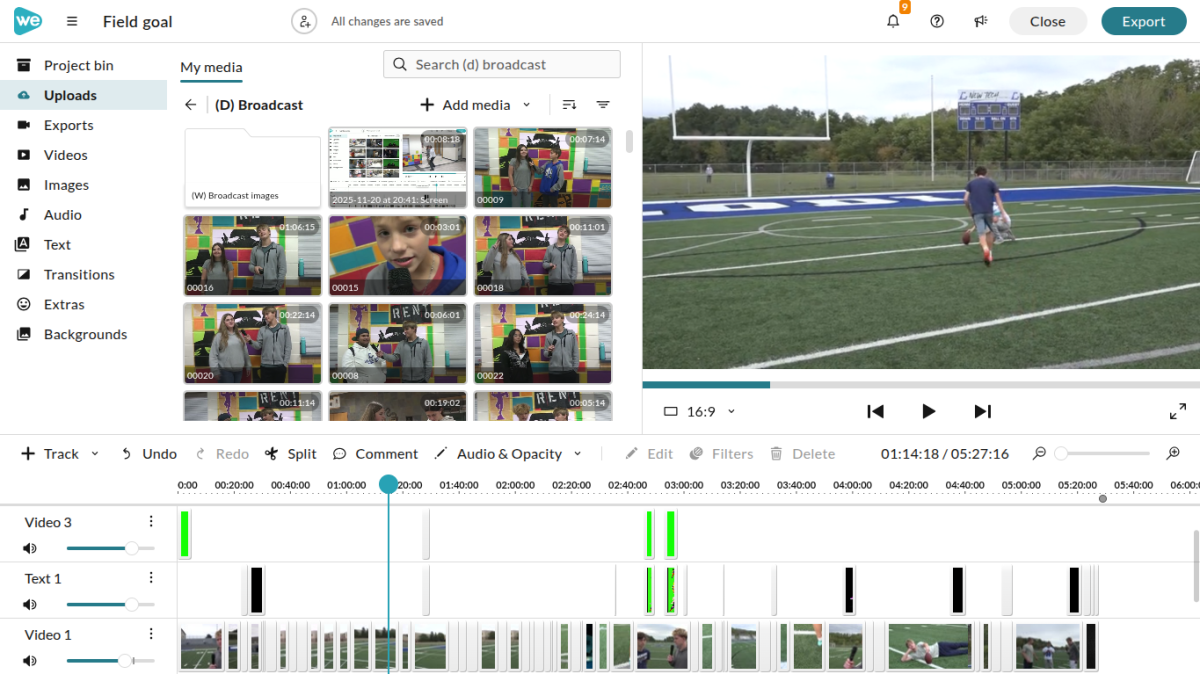
Once filming is done, there are a bunch of clips out of context. This can’t get released to the LHS public because it wouldn’t make any sense. Bryce says, “My favorite part about working on the broadcast would have to be the editing…” The editors make sure the segments make sense. They don’t just put all the clips together, though, they also make some critical decisions. “…it can also be a double edged sword, there are so many jokes that just don’t make the final cut,” he says. Not all of the clips make sense with the others, so they don’t get put into the segment. The editors also have pressure to get done by a certain time.
The broadcast isn’t released at random. It is a monthly release. This means that each broadcast needs to be written, filmed, edited, and approved by a certain date. Harrison tells us “My least favorite part of working on the broadcast is time constraints. Because we try to get a broadcast out at the end of every month…” Each step has a certain amount of time allotted. He adds that, “… we have a week of planning, a week and a half of filming, and half a week of editing. This may seem like a lot of time, but in reality it’s only 2-3 days per week,” despite this the team always tries to put out the best quality video they can, and it often pays off.
The broadcast is a crowd favorite within the writing for publication team as well as the larger high school population. Bryce adds, “Working on the broadcast is my favorite part of writing for publication, it allows me to collaborate with my classmates, and just have fun for once,” it’s a good way for people who might otherwise not associate to collaborate. Harrison likes the broadcast, “because it gives people a chance to work with higher-quality instruments that most people wouldn’t have access to, as well as an immediate audience.” That is how and why the broadcast is created for everyone’s viewing pleasure. Thank you for reading!